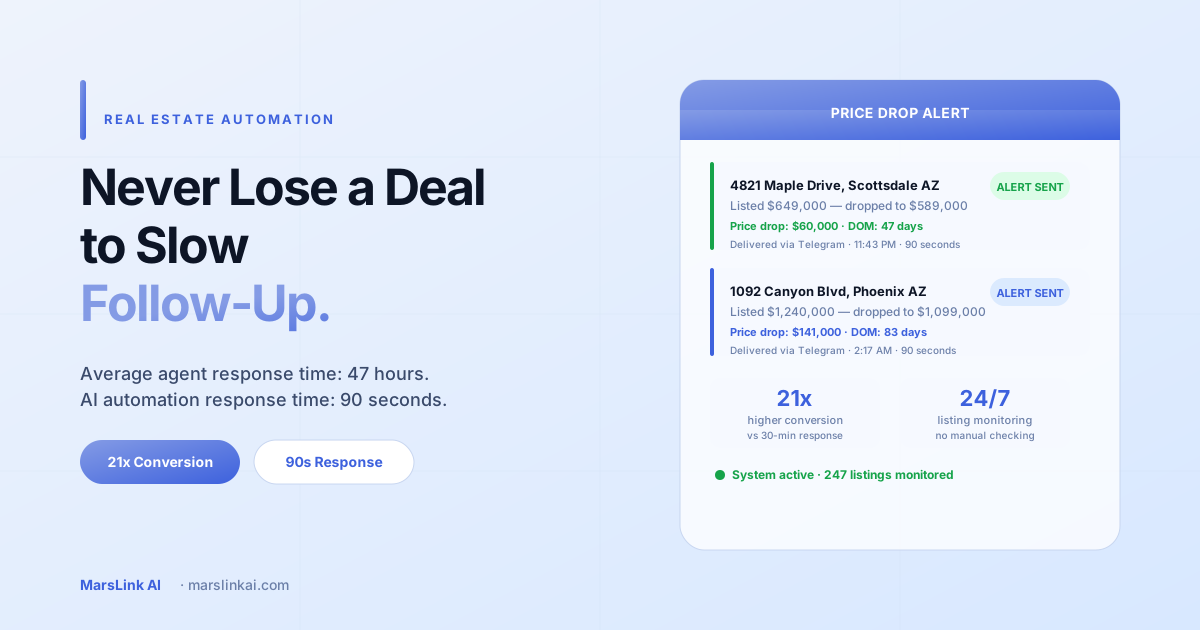
Real estate is a speed business. The agent who responds first wins, not the one with the better credentials, the nicer website, or more years in the market. Speed is the competitive advantage that nobody in real estate is talking about, because most agents still respond manually.
That gap is your opportunity. And AI automation is how you close it.
What You're Losing Every Month to Slow Follow-Up
Let's put numbers to it. Say you receive 40 new leads per month. Industry data shows that responding within 5 minutes increases conversion by 21x compared to responding after 30 minutes. The average agent responds in 47 hours.
If your current close rate on leads is 5% (industry average), and AI lead response increases that by even 30%, you go from 2 closed deals per month to 2.6. At a $400K average sale price with a 2.5% commission, that's $2,500 in additional commission per month from one automation. $30,000/year from a $2,500 build.
And that's just the lead response piece. There are two other automation categories that compound on top of it: listing intelligence and long-term nurture.
The 3 AI Automations Every Real Estate Agent Needs
1. Instant AI Lead Response
When a new lead comes in, from your website, Zillow, Realtor.com, a Facebook ad, or any other source, an AI system reads their inquiry, qualifies them (buyer vs. seller, timeline, price range), and sends a personalized response within 60–90 seconds. Not a generic auto-reply. A response that references their specific situation.
Hot leads (pre-approved, 0–30 day timeline) get an immediate phone call notification sent to you via Telegram so you can jump on it personally. Warm leads enter a nurture sequence. Cold leads get a 90-day follow-up track. Every lead is sorted, responded to, and managed, without you touching it.
2. Price Drop Monitoring (Listing Intelligence)
The fastest deals in real estate happen when a motivated seller drops their price. That's the signal: they need to move, they're open to offers, and they haven't had enough traffic. The agent who calls first, that day, has a massive advantage.
A listing intelligence system monitors hundreds of Zillow and Redfin listings in your target market 24/7. The moment a price drops, you get a Telegram alert with the address, days on market, price history, estimated seller motivation score, and comps. You get this in under 90 seconds, before most agents have even opened their MLS app.
We built PriceCutAlert on this exact stack. It's the same system we deploy for real estate clients as a custom build.
3. 90-Day Automated Follow-Up Sequences
Most leads aren't ready to transact on day one. Research shows that 70% of buyers and sellers who eventually transact do so 3–12 months after first contact. The agents who stay top of mind for that entire window win the deal, without doing any work.
A 90-day follow-up sequence sends a mix of market updates, relevant listings, check-in messages, and value-add content on a schedule you set once. AI personalizes each message based on what the lead originally told you. When they reply, you get notified instantly. The sequence pauses automatically until you've had the conversation.
What the Architecture Actually Looks Like
The full real estate automation stack connects: your lead sources (web form, Zillow API, Facebook Lead Ads), a CRM (HubSpot, Airtable, or a custom database), an AI qualification layer (Claude or GPT-4), email and messaging delivery, a 90-day follow-up sequence, and instant notifications for hot leads.
Every component is self-hosted on infrastructure you own. No per-task pricing, no vendor lock-in. If you ever want to change anything, any developer can work with the system. You own every credential and every configuration file from day one.
Build time: 10–14 days. Most clients see their first automated lead response within 72 hours of signing.
| Metric | Without Automation | With AI Automation |
|---|---|---|
| Lead response time | 47 hours average | Under 90 seconds, 24/7 |
| Listings monitored | Whatever you manually check | Hundreds, around the clock |
| Follow-up at 60 days | Most leads forgotten | Automated sequence still running |
| After-hours coverage | Zero, leads go cold | Full AI coverage, every night |
| Time on admin | 8–12 hours/week | Under 1 hour/week |
What to Expect in Your First 30 Days
Week 1: Audit call, scoping, system build begins. You define your lead sources, target markets, and qualification criteria.
Week 2: System goes live on test data. You review AI responses, tune the tone and language, approve the follow-up sequence content.
Week 3: Full production launch. Every new lead gets an automated response. Listing monitoring starts. You start getting Telegram alerts for price drops in your market.
Day 30: You review the numbers, response rate, follow-up engagement, lead pipeline growth. We adjust anything that's underperforming. This is when most clients see the first deal that they would have lost to slow follow-up.
Want to See Exactly What This Looks Like for Your Market?
30-minute AI Workflow Audit. We map your current lead pipeline, identify where deals are falling through, and show you the exact automation that closes the gap. Free, no commitment.
Book Your Free 30-Min AuditThe One Mistake Real Estate Agents Make with Automation
They automate the wrong thing first. Most agents start with social media scheduling or report generation, things that feel productive but don't move the revenue needle.
The highest-ROI automation for any real estate agent is always lead response speed. That's the leak that costs the most, and it's the one that pays back fastest. Start there. Get one deal you would have missed. Then build everything else on top of it.
The second mistake: using a generic CRM automation (like HubSpot sequences) instead of a custom AI system. Generic tools send templated messages. AI reads the lead's original inquiry and responds to what they actually said. The difference in reply rate is significant, typically 3–5x higher engagement.
Is This Right for You?
AI lead automation makes the most sense for agents and teams who:
- Receive more than 10–15 leads per month (the leverage compounds with volume)
- Are losing deals to faster-responding competitors
- Have a follow-up problem, leads going cold after the first contact
- Want to work fewer hours while maintaining or growing production
If you're a solo agent receiving 3 leads a month, the math probably doesn't justify a full build yet. But if you're doing real volume and watching deals slip to agents who pick up the phone first, this is the fix.